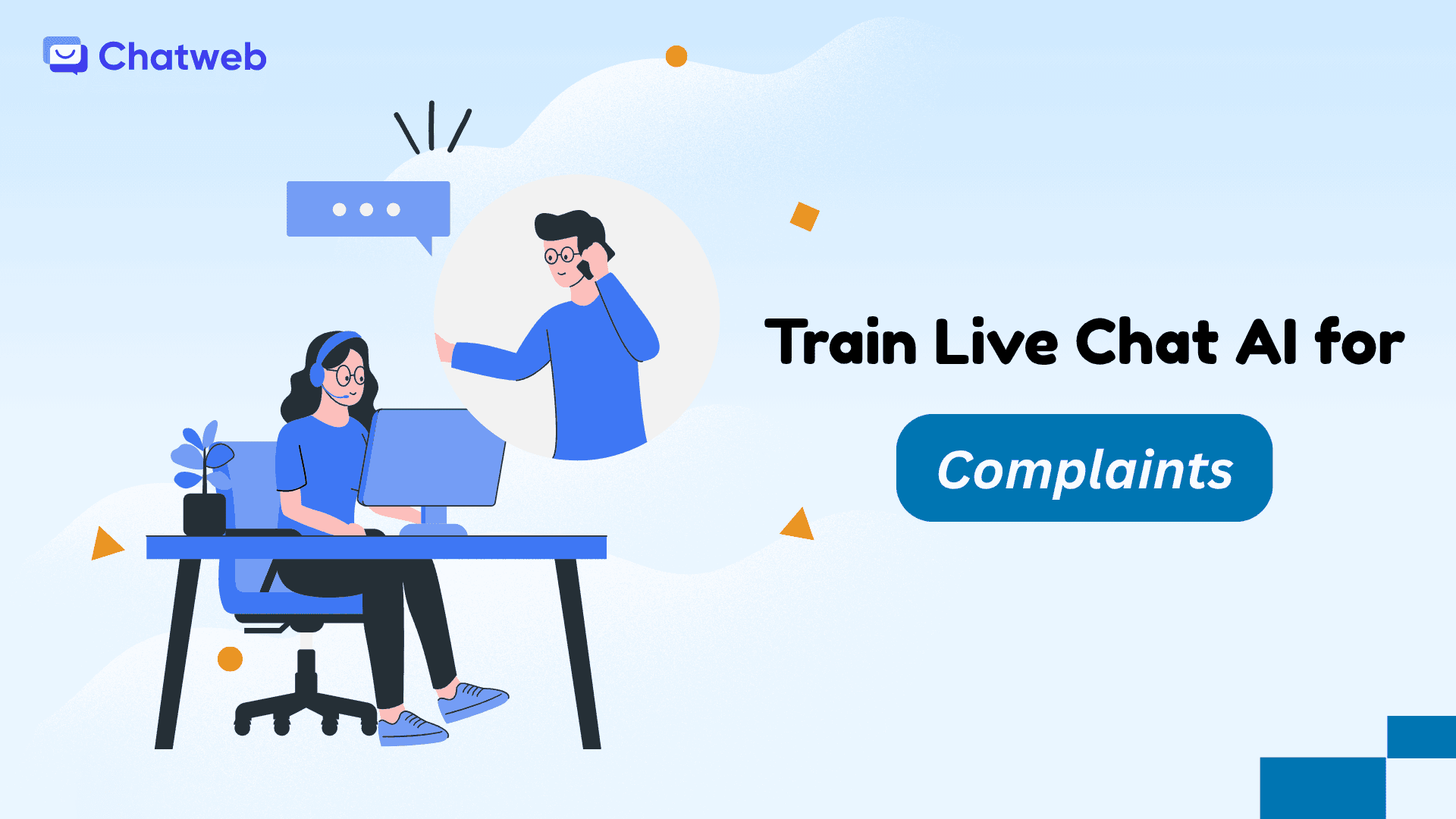
Running a small or medium-sized enterprise (SME) means every customer interaction can make or break your reputation. Complex complaints—like late deliveries, defective products, or billing disputes—are high-stakes moments. Mishandle them, and you risk losing not just a sale but a loyal customer and their referrals. Live chat AI, when trained right, can be your secret weapon: It defuses tension, resolves issues fast, and keeps your brand human, all while saving your team from burnout.
This article dives deep into how to train live chat AI to handle complex customer complaints for your SME. We’ll explore why complaints are critical opportunities, a detailed training blueprint, strategies to make AI empathetic and effective.
1. Why Complex Complaints Matter (and Why AI Can Help)
Complaints aren’t just problems—they’re chances to show customers you care. A customer venting about a late order or a faulty item is still engaged; they’re giving you a shot to make things right. For SMEs, where word-of-mouth and reviews drive growth, resolving these issues well can turn an angry customer into a lifelong advocate. But complex complaints—think emotional outbursts, multi-step disputes, or vague frustrations—require finesse. Human agents can get overwhelmed, especially with limited staff, and inconsistent responses hurt trust.
Live chat AI steps in as a scalable solution. It’s not about replacing humans but empowering them: AI can handle initial triaging, calm upset customers, and gather context, leaving agents to tackle only the trickiest cases. The catch? Training AI to navigate these nuances takes strategy. A poorly trained bot spewing “I’m sorry, I don’t understand” can escalate a complaint into a social media rant. Done right, AI feels like a caring teammate, guiding customers to resolution while freeing your team for growth tasks. Let’s break down how to train it.
2. Step-by-Step Blueprint to Train Live Chat AI for Complex Complaints
Training live chat AI isn’t a one-and-done task—it’s a process of building a system that listens, learns, and adapts. Here’s a detailed roadmap tailored for SMEs, designed to make your AI a complaint-handling pro.
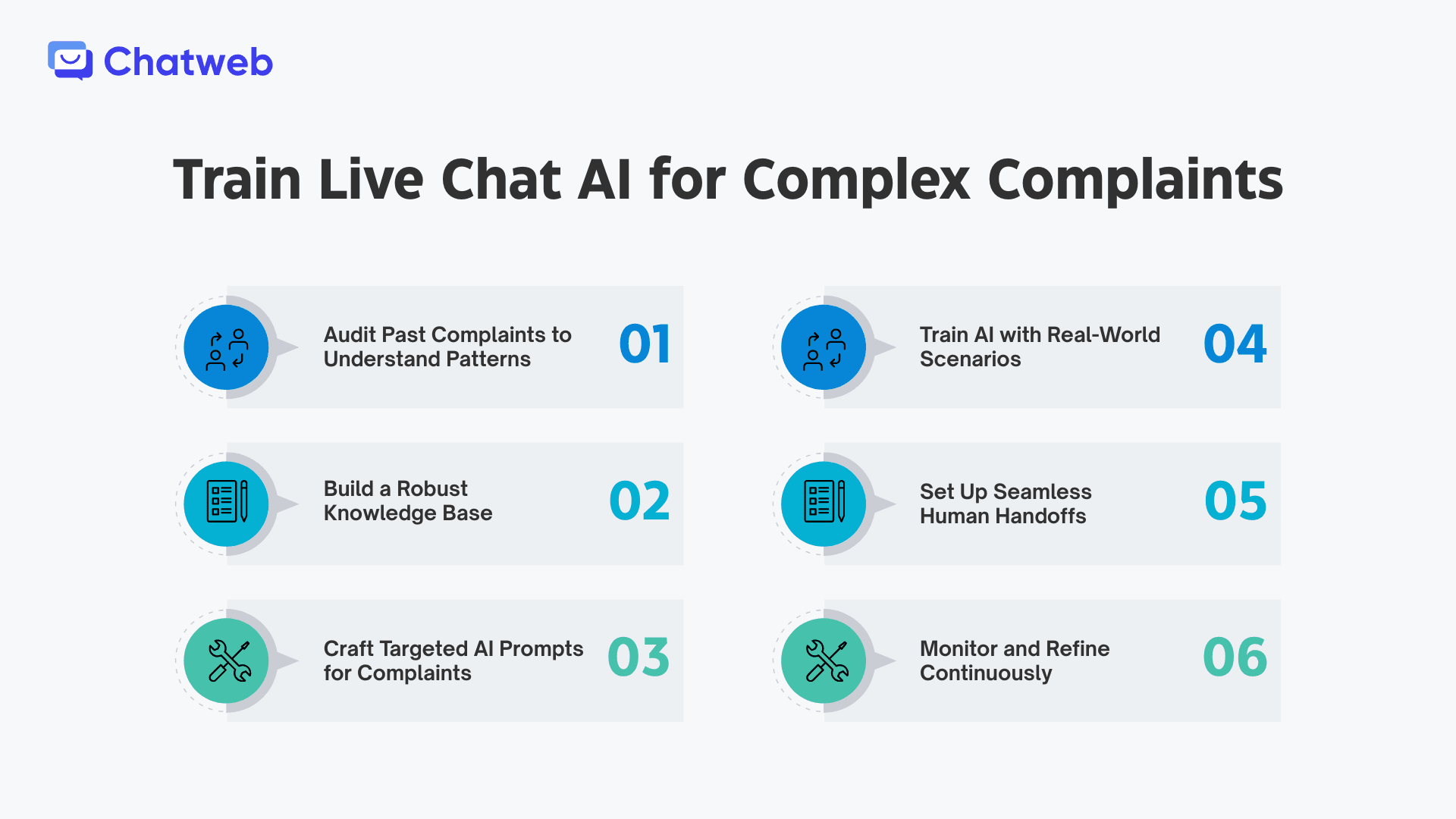
2.1. Audit Past Complaints to Understand Patterns
Start by digging into your customer service history. What are the most common complex complaints? Late shipments, billing errors, product defects, or misaligned expectations? Understanding these patterns shapes your AI’s training.
How to Do It:
- Pull 50-100 recent complaints from emails, tickets, or chat logs.
- Categorize them: Delivery issues, quality problems, refund disputes, etc.
- Note emotional triggers: Words like “urgent,” “disappointed,” or “frustrated” signal high-stakes cases.
- Identify resolution paths: What worked (e.g., refund, replacement, apology)? What failed (e.g., generic replies)?
This audit creates a foundation—your AI will mimic the best resolutions while avoiding past mistakes.
2.2. Build a Robust Knowledge Base
Your AI needs a detailed “playbook” of complaint scenarios, solutions, and brand policies. This isn’t just FAQs—it’s a deep dive into nuanced cases.
How to Do It:
- Create a document with complaint types, each with:
- Triggers: Keywords like “late” or “broken.”
- Context: Order status, customer history.
- Solutions: Step-by-step fixes (e.g., “Offer refund if <30 days; else, store credit”).
- Add brand tone: “Empathetic, professional, solution-focused.”
- Example: For “late delivery,” include tracking lookup steps and an apology script.
- Store this in a format your AI platform (like Chatweb) can access, such as a cloud-based spreadsheet.
A rich knowledge base ensures AI doesn’t flounder when faced with “My order never arrived, and I’m furious!”
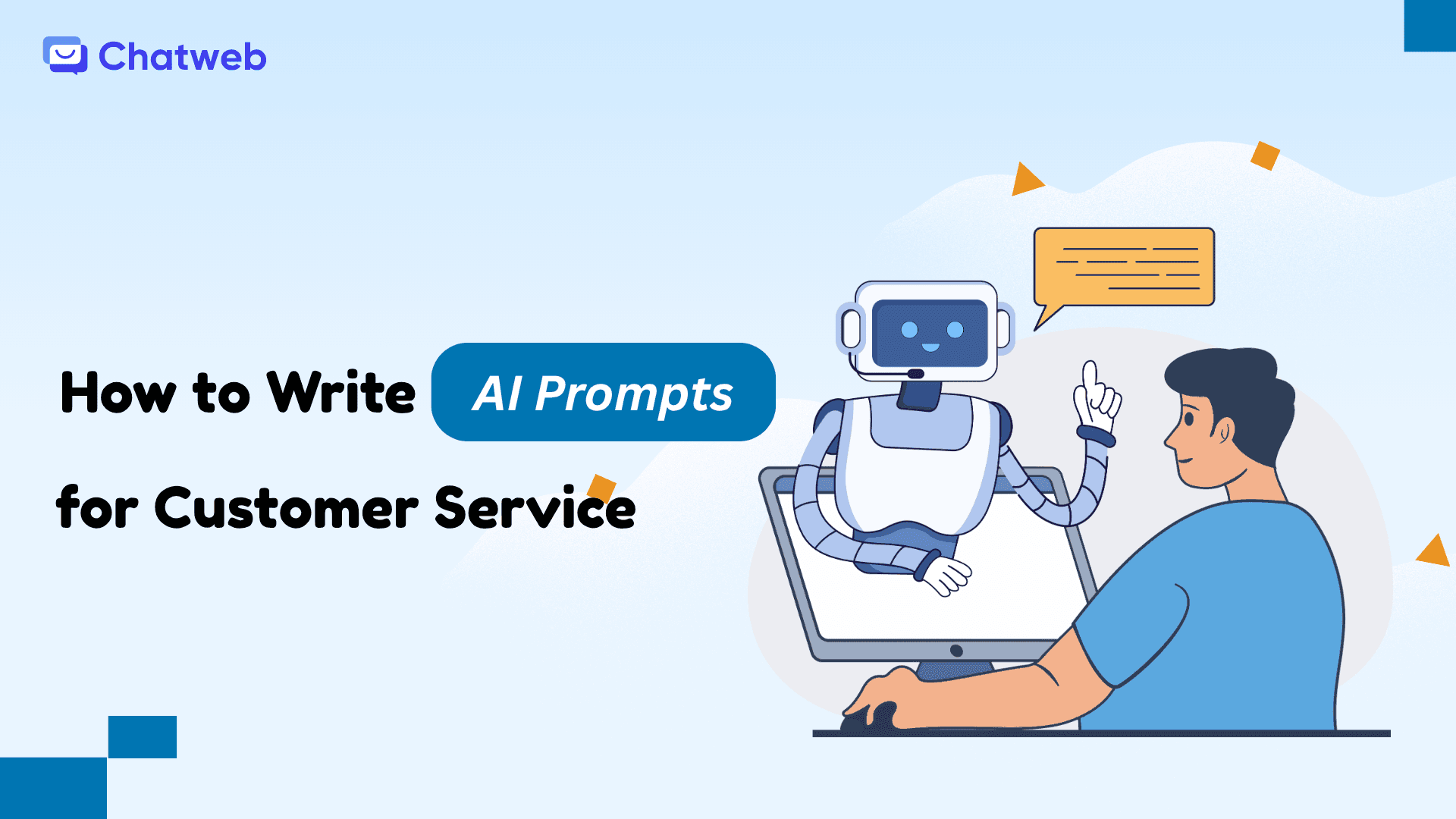
2.3. Craft Targeted AI Prompts for Complaints
Prompts are the heart of your AI—they tell it how to respond, what tone to use, and when to escalate. For complex complaints, prompts need to balance empathy, clarity, and action.
How to Do It:
- Write prompts for each complaint category, including:
- Empathy: Start with acknowledgment (e.g., “I’m so sorry this happened”).
- Context Gathering: Ask clarifying questions (e.g., “Can you share your order number?”).
- Solution Path: Offer fixes based on policy (e.g., “I can process a refund or send a replacement”).
- Escalation Rule: Transfer to humans if keywords like “urgent” appear or after two unclear responses.
- Example Prompt: “You’re a caring chatbot for an SME. If a customer says ‘late,’ ‘delayed,’ or seems upset (e.g., uses all caps), respond: ‘I’m so sorry your order hasn’t arrived yet—let’s fix this! Can you share your order number so I can check the status?’ If tracking shows delay, say: ‘It’s due tomorrow—want me to confirm with the carrier or offer a partial refund?’ If no data or customer remains upset, escalate to an agent with the chat log.”
- Keep tone human: Avoid jargon, match your brand (e.g., warm for retail, professional for B2B).
Test prompts with sample complaints to ensure they feel natural and resolve issues.
2.4. Train AI with Real-World Scenarios
AI learns best by practicing. Use your audit data to simulate complaints, refining how the bot responds.
How to Do It:
- Role-play 10-20 complaints with your team, feeding them into the AI.
- Test edge cases: Vague rants (“This is awful!”), multiple issues (“It’s late and broken!”), or emotional outbursts.
- Adjust prompts if AI misfires (e.g., offers refunds for non-eligible items).
- Use platforms like Chatweb with built-in training modes to iterate quickly.
This step ensures AI handles real-world messiness, not just textbook cases.
2.5. Set Up Seamless Human Handoffs
Complex complaints often need human empathy or judgment. Train AI to recognize when it’s out of its depth and transfer smoothly.
How to Do It:
- Add escalation triggers: Keywords (“escalate,” “manager”), sentiment (three angry responses), or complexity (e.g., legal threats).
- Example Prompt: “If customer uses ‘urgent,’ ‘legal,’ or repeats issue 3x, say: ‘I’m connecting you to our team for faster help!’ and transfer with full chat history.”
- Ensure agents see the context in real-time (via CRM or chat dashboard).
This keeps customers from feeling bounced around, preserving trust.
2.6. Monitor and Refine Continuously
AI isn’t set-and-forget. Regularly check its performance to catch gaps and improve.
How to Do It:
- Review weekly chat logs: Are complaints resolved? Are escalations too frequent?
- Update prompts for new issues (e.g., seasonal delays).
- Ask customers for feedback post-chat: “Did we solve your issue?”
- Use analytics to track resolution rates and refine weak spots.
This iterative process keeps your AI sharp as customer needs evolve.
3. Strategies to Make AI Empathetic and Effective for Complaints
Training isn’t just technical—it’s about making AI feel human and solution-oriented. Here are six strategies to elevate your AI’s complaint-handling game.
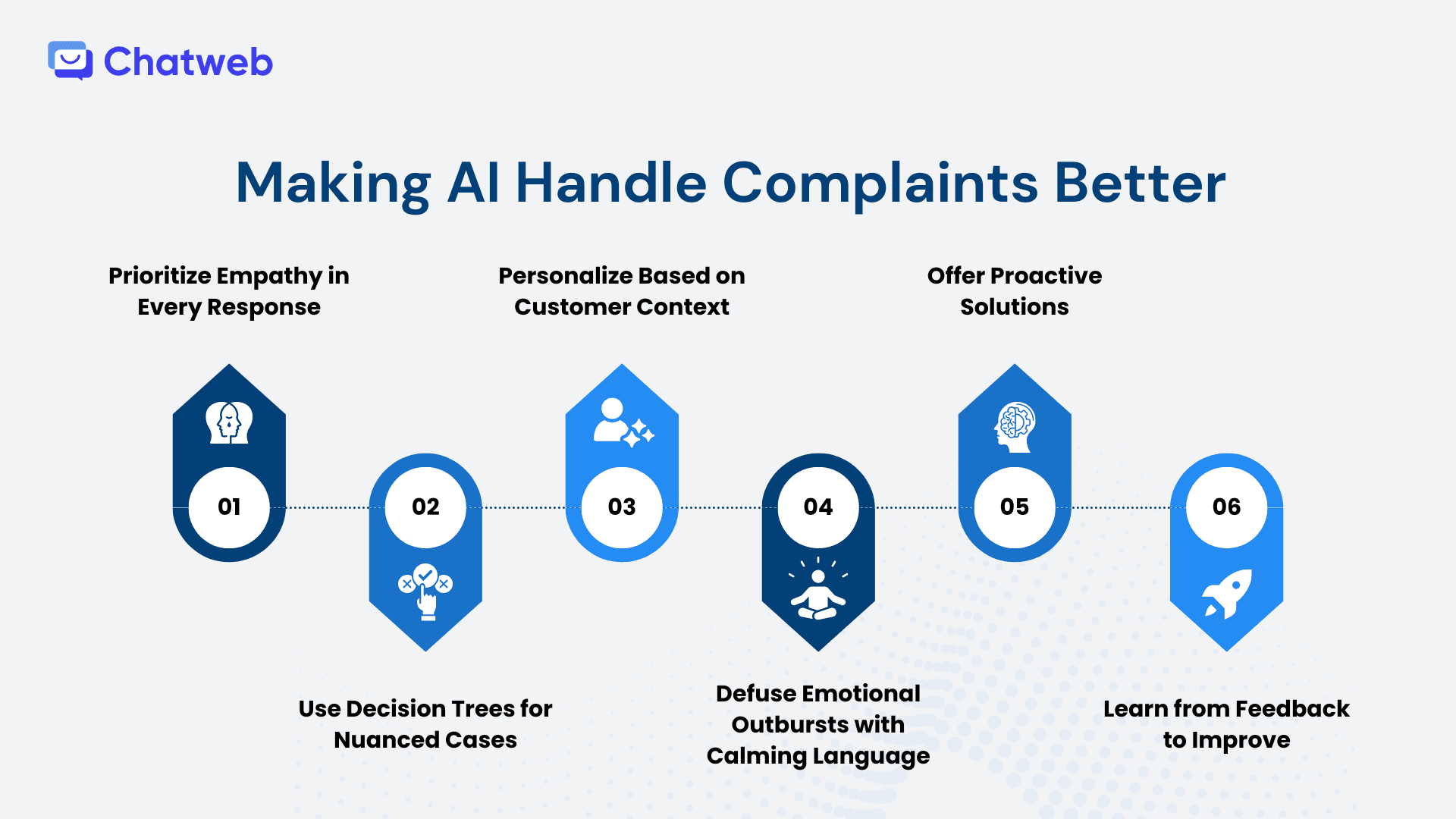
3.1. Prioritize Empathy in Every Response
Customers want to feel heard, especially when upset. AI should acknowledge emotions before diving into fixes.
Strategy: Start every complaint response with empathy.
Example: For “My product is defective,” prompt: “I’m really sorry to hear that—let’s get this sorted out. Can you describe the issue?”
Why It Works: Softens tension, shows care, and sets a positive tone.
3.2. Use Decision Trees for Nuanced Cases
Complex complaints often have multiple paths (e.g., refund vs. replacement). Decision trees guide AI through these logically.
Strategy: Build if-then rules in prompts.
Example: “If order <30 days and defective, offer: ‘Would you like a replacement or refund?’ If >30 days, say: ‘We can offer store credit—sound good?’”
Why It Works: Ensures consistent, policy-aligned resolutions without confusion.
3.3. Personalize Based on Customer Context
AI can pull data (order history, past chats) to tailor responses, making customers feel valued.
Strategy: Integrate with CRM to use customer details.
Example: “Hi Sarah, I see you ordered our Pro Plan last month—sorry for the billing issue! Let’s refund the overcharge.”
Why It Works: Personal touches reduce frustration and build loyalty.
3.4. Defuse Emotional Outbursts with Calming Language
Angry customers need de-escalation. AI can use neutral, supportive language to calm things down.
Strategy: Train AI to detect emotional cues (e.g., all caps, “furious”) and respond gently.
Example: “I totally understand how frustrating this is—let’s work together to fix it. What happened with your order?”
Why It Works: Lowers tension, keeps the conversation productive.
3.5. Offer Proactive Solutions
Don’t wait for customers to demand fixes—AI should suggest options upfront.
Strategy: Include multiple solutions in prompts.
Example: “I’m sorry your package is late! I can offer a partial refund, expedited shipping on your next order, or track it now—which works best?”
Why It Works: Shows initiative, speeds resolution, and delights customers.
3.6. Learn from Feedback to Improve
Customer feedback after complaints reveals what AI does well (or not). Use it to refine prompts.
Strategy: Add post-chat surveys and analyze transcripts.
Example: If customers say “bot didn’t understand,” update prompts with clearer rules or new keywords.
Why It Works: Keeps AI aligned with evolving complaint patterns.
These strategies make your AI a complaint-handling star—empathetic, efficient, and retention-focused.
4. Common Pitfalls to Avoid When Training AI for Complaints
Even a well-trained AI can stumble if you’re not careful. Here’s what to watch out for:
- Lack of Empathy: Generic responses like “Contact support” feel cold. Always start with acknowledgment.
- Over-Reliance on AI: Complex complaints often need human nuance—set clear escalation triggers.
- Outdated Knowledge Base: New products or policies can trip up AI. Update monthly.
- Ignoring Mobile Experience: Many complaints come via mobile—ensure AI responses are clear on small screens.
Avoid these by testing rigorously, updating regularly, and prioritizing customer feedback.
5. How to Get Started Training Your AI Today
Ready to make your live chat AI a complaint-handling pro? Here’s a quick-start plan:
- Audit Complaints: Review 50-100 past tickets to map common issues and solutions.
- Build Knowledge Base: Document complaint types, policies, and tone in a cloud tool.
- Write Prompts: Start with 5-10 scenarios (e.g., late delivery, refunds), using empathy and decision trees.
- Test with Role-Play: Simulate complaints to refine AI responses over a week.
- Integrate with CRM: Sync with tools like HubSpot for personalized follow-ups.
- Launch and Monitor: Roll out on one channel, track resolution rates, and tweak monthly.
Start small, focus on one complaint type, and scale as you see wins.
Conclusion
Complex customer complaints are inevitable, but they’re also opportunities to shine. A well-trained live chat AI—empathetic, proactive, and smart—can resolve issues fast, save your team time, and turn frustrated customers into loyal advocates. Use the blueprint, strategies, and examples above to craft a system that handles complaints like a pro.
Ready to transform your complaint handling? Try Chatweb, an AI-powered live chat platform built for SMEs to tackle complex issues with empathy and efficiency. Share your toughest complaint challenge in the comments, and let’s brainstorm how Chatweb can help. Start your free trial today and turn complaints into your competitive edge!


![[PayPal x Chatweb] Chatweb is now an official PayPal Payment Partner!](https://assets-content.aifusionlab.io/image_c1163cbd0d.png)